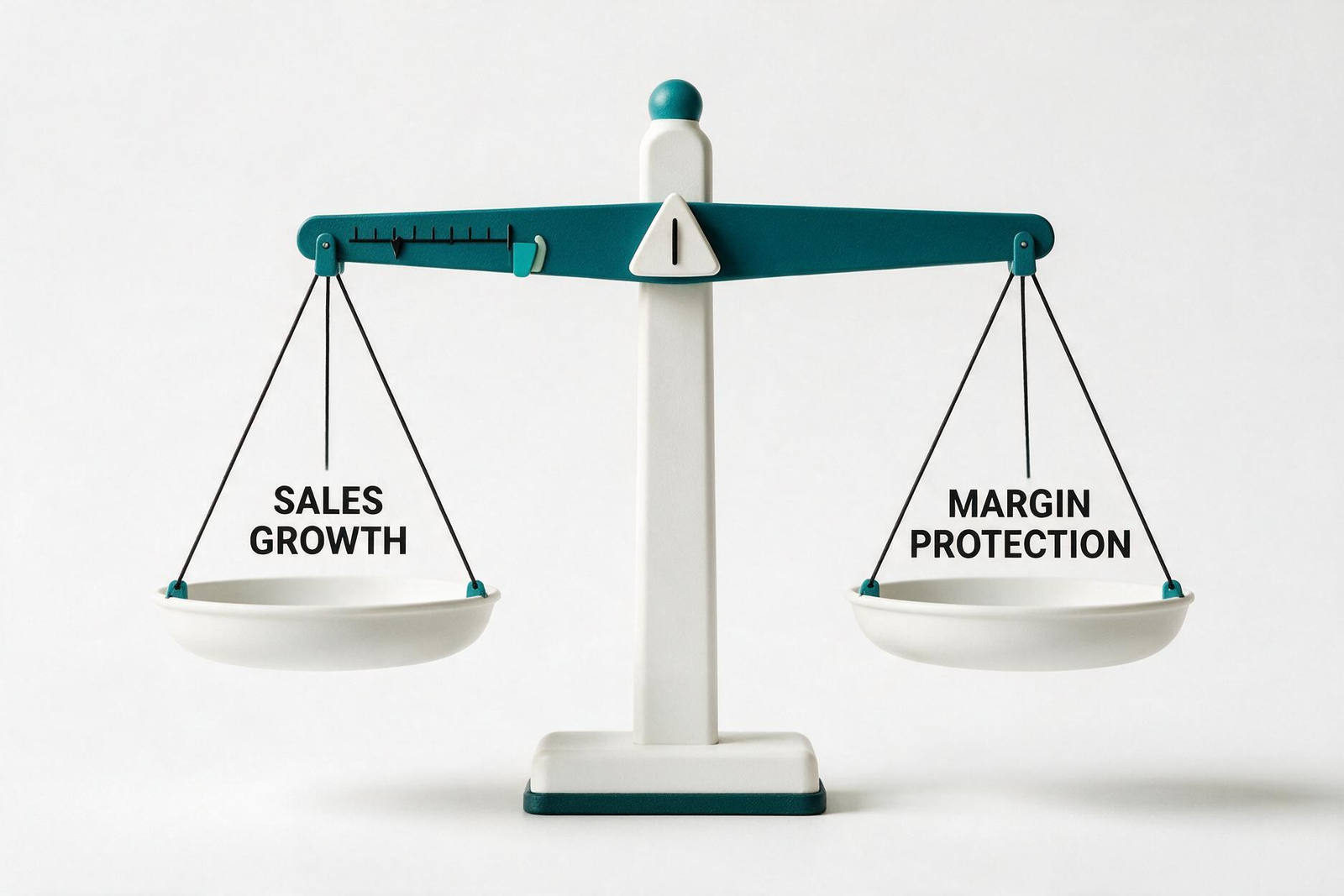

Not every discount is a problem. Some discounts create value. Others simply give margin away. The challenge is knowing the difference.
Many organizations can report revenue and average discount levels but still struggle to understand where margin is being lost. Discounts may sit across different systems, customer agreements, rebates, sales teams, or regional processes.
Without visibility, discount governance becomes difficult. The answer is not to stop discounting. It is to measure what is happening and understand why.
Track the Discount, Not Just the Sale
A discount should not disappear into the transaction. Organizations need visibility into the journey from list price to the price they ultimately keep.
This is where the Pricing Waterfall becomes particularly useful. It shows how list price is reduced by standard discounts, exceptional discounts, rebates, incentives, and other adjustments before reaching pocket price.
This allows management to ask better questions:
- Which customers receive the largest discounts?
- hich products or channels generate the most exceptions?
- Which sales teams discount most frequently?
- Are high discounts associated with strategic value?
- How much margin is being lost through recurring exceptions?
The objective is to move from “How much are we discounting?” to “Is the discount creating enough value to justify its cost?”
Exceptions Should Be Deliberate
A strong discount policy will never cover every commercial situation.
There will always be strategic customers, competitive threats, new-market opportunities, volume commitments, and unusual circumstances that justify an exception. The problem begins when exceptions become routine.
Every meaningful exception should have:
- A clear commercial reason
- The appropriate approval
- A documented rationale
- An expected outcome
- A defined duration where relevant
- A mechanism for review
This creates accountability without removing commercial flexibility. There is also an important management signal hidden in the data.
If the same exception keeps appearing, it may no longer be an exception.
It could indicate that the pricing policy, customer segmentation, discount structure, or market strategy needs to change.
Align Incentives with Profitability
Discount governance can fail even when the rules are well designed. Why? Because incentives can encourage the opposite behavior.
If sales teams are rewarded primarily for revenue or bookings, discounting can become an easy way to close deals. The salesperson reaches the target while the business absorbs the margin impact. The solution is to connect commercial incentives more closely to economic outcomes.
Depending on the business, relevant measures can include:
- Gross or contribution margin
- Price realization
- Pocket-price performance
- Profitable revenue growth
- Strategic customer outcomes
The goal is not to make sales responsible for every element of pricing. It is to make sure the organization rewards profitable growth rather than volume at any cost.
The Goal Is Better Decisions, Not Fewer Discounts
Discount governance should not become a simple exercise in reducing the average discount percentage.
A lower discount is not automatically a better outcome. The real question is whether the price concession is earning its place. Good governance allows companies to distinguish between:
Strategic discounts that create value, and habitual discounts that simply transfer value from the company to the customer. That distinction is critical for sustainable margin management.