
If pricing feels harder than it used to, that’s because it is. Volatile input costs, shifting demand, regulatory pressure, and unpredictable supply chains have made pricing decisions more complex and more frequent.
Most companies respond by adjusting prices more often. That helps, but it doesn’t solve the core problem. Under uncertainty, the real challenge is not setting the right price once. It is maintaining control over pricing outcomes over time.
The Illusion of Control
Many organizations believe they are managing pricing because they update list prices or react to cost changes. In reality, uncertainty exposes gaps between strategy and execution.
Small, reactive decisions begin to accumulate:
- Discounts increase to secure short-term volume
- Exceptions become routine
- Sales teams adapt prices to local pressures without visibility
These actions are understandable. But they create inconsistency and weaken pricing discipline. Over time, margins become unpredictable, even when demand remains stable. This is where uncertainty does the most damage. It amplifies existing weaknesses in pricing execution.
What Actually Drives Margin Volatility
When markets fluctuate, three factors typically explain most margin changes:
- Price realization (what you keep after discounts and rebates)
- Volume shifts (what customers buy and when)
- Product mix (what you sell more or less of)
Tools like the pricing waterfall and margin bridge help isolate these effects. They turn uncertainty into something measurable, allowing you to separate market impact from internal execution issues.
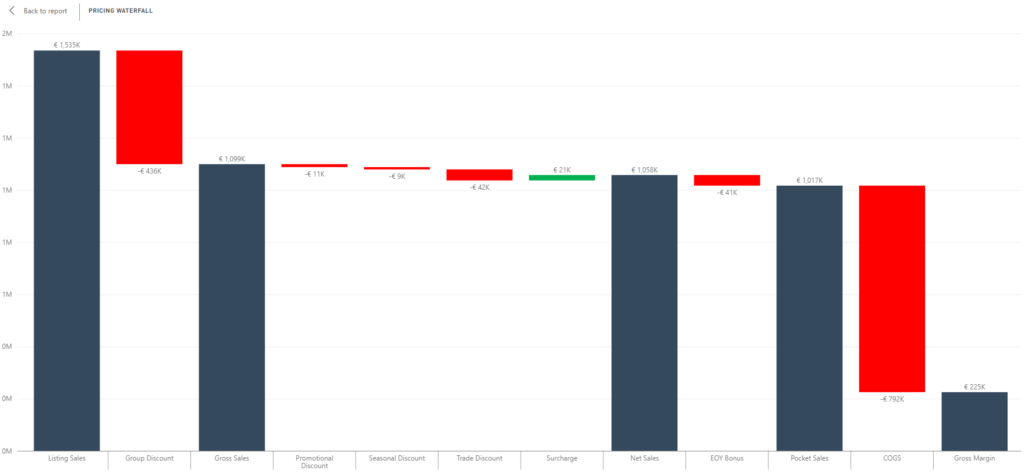
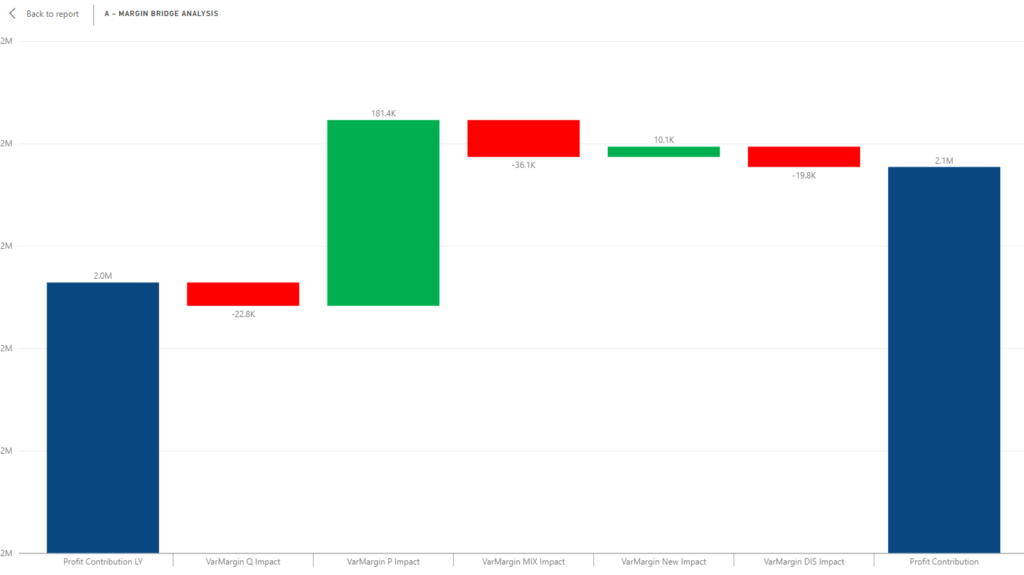
For example, a margin decline during a cost increase might seem unavoidable. But analysis often shows that the bigger driver is increased discounting or a shift toward lower-margin products.
The Risk of Overreacting
Uncertainty often leads to short-term thinking. Companies lower prices too quickly to protect volume or delay increases to avoid customer pushbacks.
Research from other organisations shows that pricing has a disproportionate impact on profitability compared to volume changes or cost reductions. Even small, unnecessary price concessions can outweigh gains elsewhere.
The risk is not just pricing incorrectly. It is about reacting without understanding the full impact.
Building Resilience in Pricing
Strong pricing organizations don’t try to eliminate uncertainty. They build systems that perform despite it. This typically includes:
- Clear pricing structures with defined guardrails
- Controlled discounting with approval logic
- Transparent incentives aligned with profitability
- Regular monitoring of price realization and exceptions
The goal is consistency, not rigidity. Teams need flexibility to respond to market changes, but within a framework that protects margins.
Turning Uncertainty into Opportunity
- Capture higher margins where demand remains strong
- Reposition products based on value rather than cost
- Strengthen relationships through consistent pricing logic